


All In On Heat Pump Cut 75 % Energy‑Use
All-in-one heat pump systems have the potential to save 75% on energy consumption, primarily because these systems work smarter, not harder. Behind all that magic is a number: COP, or Coefficient of Performance. If a heat pump has a COP between 3-4 or more, it means that for every unit that it expands, it is able to transfer three to four units of heat. That’s considerably more efficient compared to old electric or gas water heaters that tend to waste lots of energy to accomplish the same thing.
Heat Pump All In One Unit Built for Australian Toughness
Astra Green Solutions design all in one heat pump air conditioning units to withstand Australia’s harsh weather. From sweltering summers to freezing winters, it goes on without complaining. The unit is tightly sealed, so wind, rain, and dirt don’t interfere. It operates quietly as well—there’s no humming or buzzing outside your window. Whether in the city, bush or by the coast, it’s built tough and remains quiet doing its work. Tough on the outside, clever on the inside.

Whisper‑Quiet
No one wants a noisy machine in their living space or bedroom. That’s why Astra Green Solutions’ all in one heat pump systems are designed to operate in a whisper. The fan and compressor stay ultra-quiet, even when working hard. It’s quieter than most dishwashers—so you won’t even know it’s there. Silent operation, perfect for tight spaces.

Metal Casing
Astra Green Solutions’ all-in-one heat pump air conditioning unit’s outer shell is made of solid metal, not fragile plastic. This helps it handle tough Aussie weather. The metal protects valuable parts, like the fan and compressor, from rain, dust, and knocks, and ensures longer equipment life. Metal holds up better than other materials, especially outdoors.

Antifreeze Safety Suite
Astra Green Solutions’ all-in-one heat pump system’s antifreeze safety suite ensures smooth operation in cold weather. With antifreeze protection, internal components stay safe, keeping the unit running even at low temperatures. Reliable and efficient, it performs consistently without freezing, even on frosty mornings or during winter, providing year-round comfort and dependable heating performance.

Compressor Warranty
Your all-in-one heat pump’s compressor, the system’s heart, transfers heat to keep operations smooth. Astra Green Solutions offers a solid compressor warranty, ensuring repairs or replacement if issues arise, typically for years. This warranty guarantees durability, sparing you surprise expenses and ensuring efficient function without serious breakdowns.
No Split Refrigerant Lines In All In One Heat Pump Water Heater
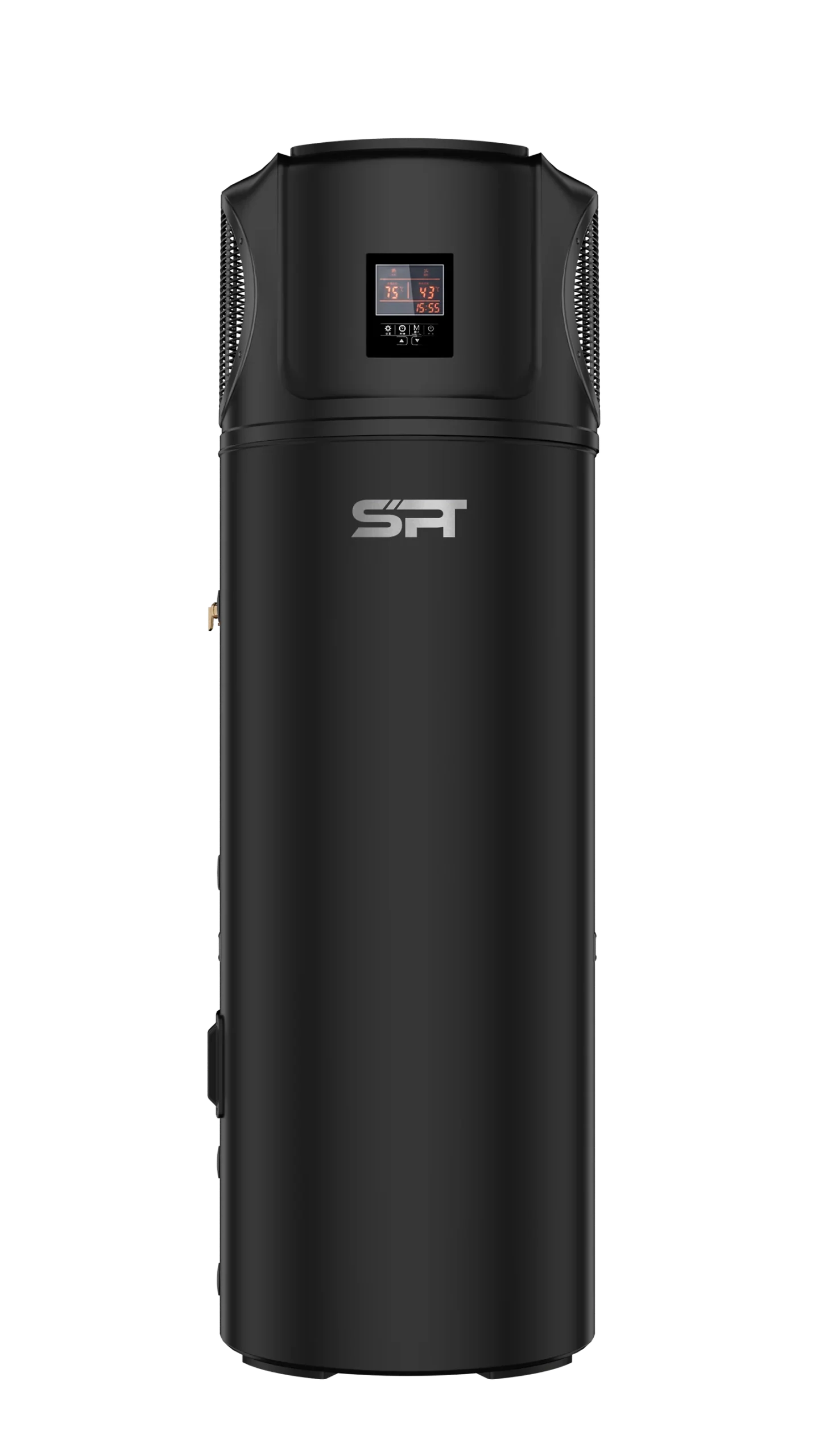
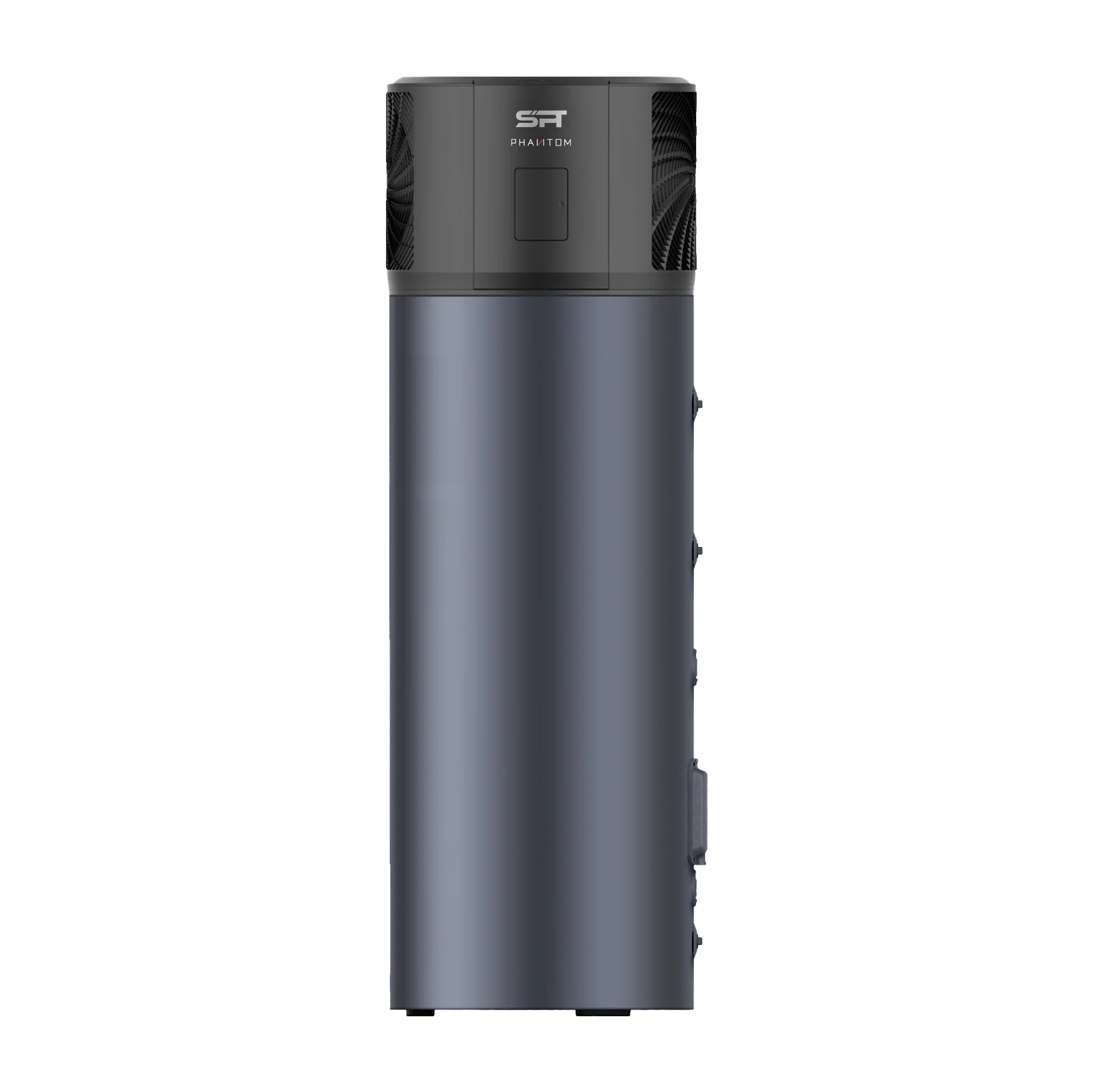
All in one heat pump systems arrive as one complete system—no external components, no extended piping, and no split refrigerant lines. That’s a huge advantage for Aussie homes, particularly ones that don’t have plenty of spare room or where the weather can get harsh. Since all is contained in one compact package, you have hot water without all the hassle associated with standard split systems.
In outdated all in one heat pump models, you’ve often got two components: an outside component that performs the heating task and an internal component that deals with the water. These two components communicate through extended refrigerant pipes that pass through your walls. Those pipes can leak in the future, whether they damage them, or simply complicate installation. They complicate repair and service operations as well. That all goes away in Astra Green Solutions’ all in one heat pump water heater.
No split heat pump system lines also reduce energy loss. Working refrigerant through long pipes, particularly outside, results in heat loss along the way. That means it works harder and burns more power. But by making the heat pump all in one unit, there is next to zero waste. The heat flows directly from pump to tank—easy, efficient, and nice on power.
Installers prefer these systems because installation is much quicker and less expensive. You don’t need to drill holes in the house or play with gas lines. You simply connect the water and electricity, and you’re set. That also means less that can go wrong down the road.
So why install Astra Green Solutions’ all-in-one heat pump system? One good reason is that it’s simply more efficient. Because there aren’t as many components to install, there’s less chance of mistakes. By not needing to install separate indoor and outside units, refrigerant lines, and extra wiring, there’s less likelihood that something will go awry.
This streamlined system results in smoother, more efficient performance over the years, conserving energy and money. In essence, it’s one appliance that does it all – heating, cooling, and hot water – making it an efficient, easy-to-maintain, cost-saving solution for every home.
Government‑Backed Incentives For All In One Heat Pump Cost
The Australian government is fully endorsing energy-efficient home upgrades, and an all-in-one heat pump system is one of the most effective options for making use of that. Incentives and rebates exist in most states and territories, making it more feasible to replace older systems with more environmentally friendly ones. Government-supported programs reduce the initial cost of heat pump hot water system installation, allowing homeowners to replace older, less efficient models more easily. Your location will determine if and how much in terms of rebates or discounts reduces your net investment.
All In One Heat Pump System Smart Operation
An all-in-one heat pump system is not simply an ingenious means to heat water—it’s also intelligent in terms of how it operates. Adaptive defrost, internal timers, and solar-PV synchronization all contribute to making a huge impact on energy consumption and ease of living. All this makes the system cooperate with your habits, not challenge them.
Let’s begin with adaptive defrost. As it gets colder outside, all in one heat pump system coils tend to frost over. Older systems simply defrost on a timer, even in the absence of ice. That’s wasteful. But with Astra Green Solutions’ smart defrost feature, the system self-checks and melts ice only when it actually needs to. It saves energy and keeps the unit operating smoothly, even on very cold mornings.
The timer is another useful component. You can have warm water only at times when you want—say, in the morning or just before dinner. Then it’s not operating throughout the day. Some even have it programmed to warm at off-peak hours when energy is less expensive. So not only is it conserving energy, but also reducing your bill by doing so at the most efficient times.
And there’s also the solar-PV synchronization. If you have solar panels installed on your roof, the all in one heat pump system can function in conjunction with them. It can operate when your panels generate electricity, utilizing energy from the sun instead of drawing from the grid. This results in more savings and less demand on your energy company. It also means that you’re enjoying clean energy while maintaining warm water.
It all adds up to one intelligent, hard-working heat pump by Astra Green Solutions. This system is programmed to cooperate, blending in with your everyday routine and responding to varying weather patterns. Whether it’s a searing summer afternoon or an icy morning in winter, the heat pump keeps your home cozy.
It’s even compatible with solar systems, making it even more energy-efficient and economical by tapping renewable energy from the sun. Not bad for one heater in one outside box, huh? Its compact, all-in-one design offers convenience combined with efficiency, saving energy while keeping your home on point all year.
FAQ's
Why is an all-in-one heat pump more energy efficient than a split heat pump system?
The energy efficiency advantage of an all-in-one heat pump comes down to two key factors: system design and heat transfer efficiency. In a split heat pump system, the compressor and heat exchanger sit outdoors while the hot water tank sits inside — connected by refrigerant lines that run through walls or under the floor. Every metre of refrigerant piping is a potential source of energy loss, as heat dissipates into the surrounding environment as the refrigerant travels between components. An all-in-one system eliminates this entirely — the compressor, heat exchanger, and storage tank are all housed in a single compact unit, meaning virtually zero energy is lost in transit. The second advantage is the Coefficient of Performance (COP). All-in-one heat pump systems from Astra Green Solutions achieve a COP of 3 to 4 or higher — meaning for every 1 unit of electricity consumed, 3 to 4 units of heat energy are delivered to your water. By comparison, a standard electric element hot water system has a COP of just 1. The combined effect of no refrigerant line losses and a high COP means all-in-one systems can reduce hot water energy consumption by up to 75% compared to conventional electric systems.
How much space is required to install an all-in-one heat pump hot water system?
All-in-one heat pump systems are specifically designed to be compact and space-efficient — one of their biggest practical advantages over split systems. A typical all-in-one unit has a footprint of approximately 600mm x 600mm and stands between 1.2m to 1.8m tall depending on the tank capacity (commonly 200L, 270L, or 315L). For installation, the unit requires a minimum clearance of around 300–500mm on all sides to allow for adequate airflow to the evaporator — restricted airflow reduces efficiency. The system can be installed outdoors on a concrete pad, on a balcony, in a garage, or in a well-ventilated utility area. Unlike split systems that require indoor and outdoor spaces plus wall penetrations for refrigerant lines, the all-in-one unit needs only a single electrical connection and water inlet/outlet connections, making it far less demanding on your home’s layout. Our installation team will assess your available space during the site visit and recommend the optimal placement to maximise both performance and convenience.
Can an all-in-one heat pump air conditioning unit connect with home systems?
Yes, all on one heat pump air conditioners can usually be hooked up to home automation systems. Some modern models include Wi-Fi or smart connectivity. You can control the system remotely with apps or through smart assistants like Alexa or Google Assistant. You can change the temperature, set timers, or even keep an eye on energy consumption from your phone or tablet. Some models even integrate with installed smart home systems, allowing you to synchronize them with other smart devices, such as lighting or thermostats, to optimize energy consumption and create an even more comfortable home. Enquire anything related to heat pumps connection with home systems by Emailing Astra Green Solutions at enquiry@astragreensolutions.com.au.
How much does an all-in-one heat pump hot water system cost in Australia?
The cost of an all-in-one heat pump hot water system in Australia varies depending on the tank capacity, brand, features, and installation requirements. As a general guide, entry-level 200L all-in-one systems suitable for 1–3 person households typically start from around $1,800–$2,500 AUD for the unit alone, while mid-range 270L systems for 3–5 person households range from $2,500–$3,500 AUD. Premium 315L+ systems with advanced features such as solar PV synchronisation and smart app connectivity can range from $3,500–$5,000 AUD. Installation costs are generally an additional $300–$800 AUD depending on whether a simple like-for-like replacement is involved or whether new electrical work or plumbing modifications are required. It is important to factor in the significant government rebates available in most states — in many cases reducing the net out-of-pocket cost by $500 to over $1,000 depending on your location and eligibility. Despite the higher upfront cost compared to a standard electric hot water system, the energy savings of up to 75% typically result in the system paying for itself within 3 to 5 years. Contact Astra Green Solutions at 1300 321 786 for a personalised quote.
How long does an all-in-one heat pump hot water system last?
A well-maintained all-in-one heat pump hot water system can be expected to last between 10 to 15 years — significantly longer than the 8 to 10 year average lifespan of a conventional electric storage hot water system. The extended lifespan is partly due to the fact that heat pumps operate at lower temperatures than electric element systems, which reduces thermal stress on the tank and components over time. The compressor — the heart of the system — is one of the most critical components, and at Astra Green Solutions, our systems come with a solid compressor warranty giving you peace of mind against unexpected repair costs. The hot water tank itself is typically warranted separately and is built from corrosion-resistant materials to handle Australia’s varied water quality. To maximise the lifespan of your system, we recommend annual professional servicing covering coil cleaning, anode rod inspection, filter maintenance, and a full system performance check. With proper care, many customers get well over 15 years of reliable hot water from their all-in-one heat pump system.
Are there Australian government rebates for an all-in-one heat pump system?
Indeed, government rebates for the heat pump installation cost Australia exist but differ by state. In New South Wales, between $400 to $670 is offered for upgrading from an electric hot water heater to a heat pump. Victoria is available for up to $1,000 via the Solar Homes Program. Western Australia offers up to $1,000 for upgrading from an old electric system, while in the Australian Capital Territory, between $2,000 to $2,500 is offered in rebates for installations. These incentives offset the initial heat pump installation cost Australia to make energy-efficient options more accessible to homeowners.
What maintenance is critical for an all-in-one heat pump water heater?
In order to maintain top performance by your all in one heat pump water heater, routine maintenance is necessary. First, replace the air filter on a regular basis to keep air flowing freely. Clean off dirt or debris from the condenser and evaporator coils if necessary. Check for leaks or sediment in the water tank, particularly if there’s hard water in your area. Adjust the settings to proper temperatures, and even insulate the device. Lastly, have an annual tune-up done by a professional in order to keep all systems going smoothly and to prevent future problems.
How does the all-in-one heat pump hot water system impact energy usage?
Having a heat pump hot water system installed in your home can dramatically decrease energy consumption. Compared to other hot water heaters, such as gas or electric, heat pumps operate much more efficiently. Since heat pumps gain energy from renewable energy in the air to warm water, they use less electricity and cut down on energy expenses. In fact, an installed heat pump hot water system can cut energy consumption from conventional electric or gas heaters by as much as 75%. In the long term, this amounts to huge savings, as well as minimizing the carbon footprints of homes by making hot water heaters eco-friendly.
What tank sizes are available for all-in-one heat pump systems and which is right for my household?
All-in-one heat pump hot water systems are available in a range of tank capacities to suit different household sizes. As a practical guide for Australian homes: a 200L tank is generally suited to households of 1–2 people, a 270L tank is the most popular choice for families of 3–4 people, and a 315L or 400L tank is recommended for larger households of 5 or more people or properties with high hot water demand such as those with multiple bathrooms. Choosing the right tank size is important — a tank that’s too small will result in running out of hot water during peak periods, while an oversized tank heats more water than necessary, slightly reducing overall efficiency. Factors such as the number of bathrooms, frequency of bathing versus showering, dishwasher usage, and whether solar panels are connected all influence the ideal tank size for your home. During your free consultation with Astra Green Solutions, our team will assess your household’s hot water usage patterns and recommend the most appropriate tank size for your specific needs.
Can an all-in-one heat pump hot water system work with solar panels?
Yes — one of the most compelling features of modern all-in-one heat pump systems is their ability to integrate seamlessly with rooftop solar PV systems, and this combination represents one of the most cost-effective hot water solutions available for Australian homes. When your solar panels are generating electricity during daylight hours, the heat pump can be programmed to draw power directly from your solar system rather than from the grid — meaning you are essentially heating your water for free using energy from the sun. This is achieved through solar PV synchronisation or a solar diverter, which detects when excess solar energy is available and directs it to power the heat pump. The result is dramatically reduced grid electricity consumption and hot water running costs that approach zero on sunny days. Given that hot water heating typically accounts for 25–30% of a household’s total energy bill, combining a heat pump with solar panels delivers exceptional long-term savings. Our team can advise on the best configuration for your existing solar setup or recommend a combined heat pump and solar solution if you are installing both at the same time.
What is the difference between an all-in-one heat pump and a storage electric hot water system?
Both an all-in-one heat pump and a traditional electric storage hot water system heat water in an insulated tank — but the way they generate that heat is fundamentally different, and the difference has a major impact on your energy bills. A traditional electric storage system uses a resistance heating element — similar to a kettle — that converts electricity directly into heat. This process is 100% efficient at converting electricity to heat, but it consumes large amounts of power and is expensive to run, particularly as electricity prices in Australia continue to rise. An all-in-one heat pump, by contrast, extracts heat energy from the surrounding air and transfers it into the water tank using refrigerant technology — consuming only a fraction of the electricity needed to produce the same amount of hot water. A quality heat pump delivers 3 to 4 units of heat for every 1 unit of electricity consumed, compared to 1 unit for 1 unit with a standard electric system. Over a year, this translates to energy savings of up to 75% on your hot water costs. The upfront cost of a heat pump is higher, but the ongoing savings mean most systems pay for themselves within 3 to 5 years and continue delivering savings for a decade or more beyond that.
Is an all-in-one heat pump suitable for apartments and smaller properties?
Yes — the compact, self-contained design of an all-in-one heat pump makes it well-suited to apartments, townhouses, and smaller properties where space is at a premium and a traditional split system or large outdoor unit is not practical. Because everything is contained in a single upright unit roughly the size of a large bar fridge, it can be installed on a balcony, in a courtyard, in a garage, or in a dedicated utility area without requiring wall penetrations for refrigerant lines or a separate indoor tank installation. For apartments, it is worth checking your body corporate or strata rules regarding outdoor equipment, as some buildings have specific requirements around noise levels and placement. Astra Green Solutions’ all-in-one units are engineered for whisper-quiet operation — quieter than most dishwashers — making them ideal for shared living environments where noise is a consideration. Our team has extensive experience installing heat pump systems in apartments and medium-density housing across Melbourne, Sydney, and Canberra, and can advise on the most suitable placement and unit size for your specific property type.